
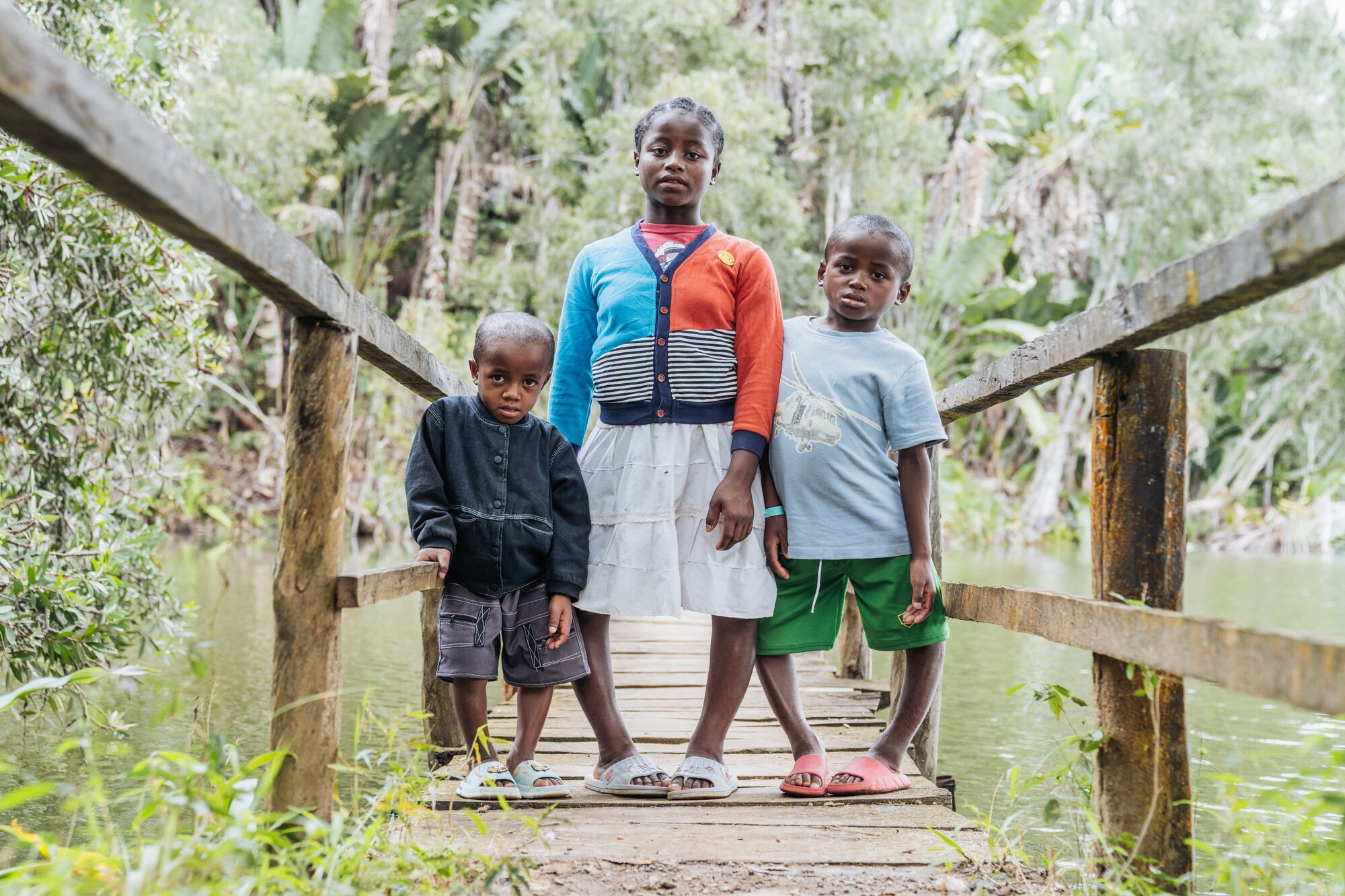
In Anjiro, a rural village in western Madagascar, families are known for many things. Some are known for farming, others for craftsmanship, generosity, or faith.
But for years, Haja’s family was known for something else. Their name became attached to their children.
People said, “Those are Haja’s children, the ones with bowed legs.”
For Haja, a farmer and a father, the label cut deeply. He had heard it too many times, a name that followed his family wherever they went and reduced generations to a condition. Haja developed bowed legs as a young boy and never received treatment. When he had children of his own, some of them also developed bowed legs. Over time, their family story became something others told about them, rather than something they could claim for themselves.
“When I heard people say, ‘The children of Haja, who have bowed legs,’ it hurt me,” Haja said. “It hurt me as a father.”
The Long Way to School
Fifteen-year-old Fenitra, eight-year-old Rolland, and six-year-old Rody struggled to walk long distances. Their legs curved outward, making everyday movement slow and painful.
Still, school was not optional.
Fenitra and Rolland, old enough to attend, woke up before dawn and set out each morning. Their village sits in hilly terrain, and the walk to school made each step more difficult on bowed legs. They had to navigate rocky paths and sharp inclines for over two hours each way, often struggling to keep their balance and sometimes falling along the way.
“At school, the kids mock us and call us ‘bow leg,’” they said. “We don’t answer them. We just keep going.”
Their mother, Berthine, continuously worried for her children. “My mind was always full,” she said. “I worried about what their lives would be like.” She wondered if her children would finish school, find work, or ever escape the sting of teasing that threatened to follow them into adulthood.
There was also the weight of what people believed. In their community, bowed legs were sometimes explained as a curse or a punishment.
“It hurt to hear those things,” Berthine said. “It made everything heavier.”
Hope arrived in 2024, when the hospital ship returned to Madagascar and the siblings were scheduled for surgery on the Africa Mercy®. Unavoidably, plans shifted, and the surgeries were postponed. The family went home and waited, hope flickering but not fading.
“I did not lose hope,” Haja said. “I believed they would be healed. I told my children, ‘You will receive your surgery. Just pray and wait.’”
Step by Step, Together
The following year, in 2025, the call came once again.
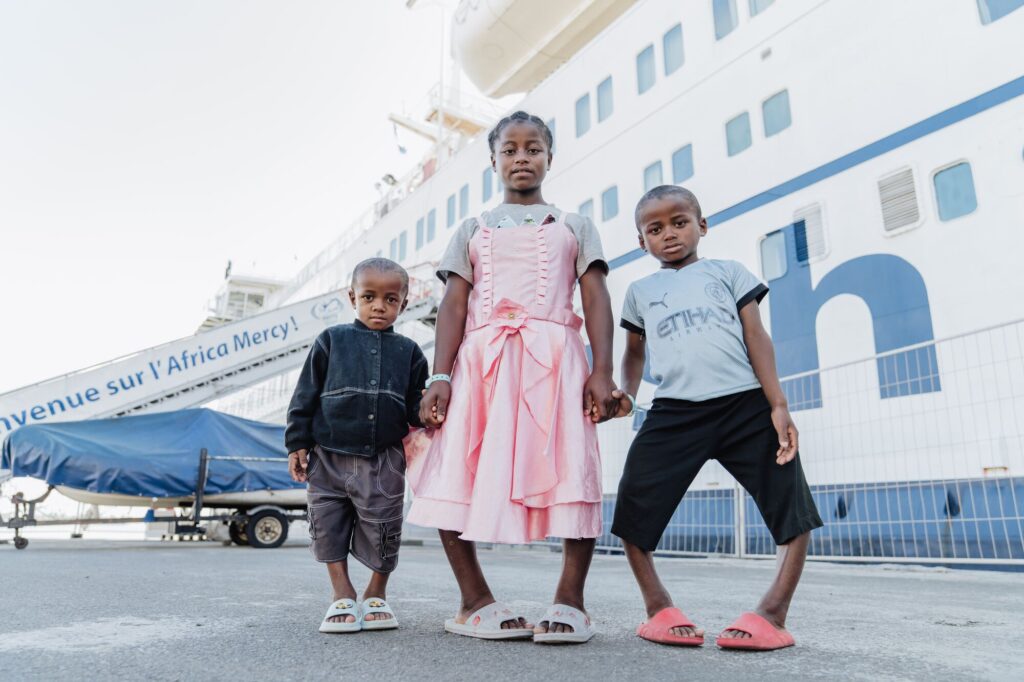
Berthine, Fenitra, Rolland, and Rody made their way back to Toamasina, where the Africa Mercy waited. Knowing she could not manage alone, Berthine was joined by Fanja, the children’s older sister, and Oliva, their cousin, who stepped in to help during the long days of surgery and recovery.
“They are very caring and loving for one another,” said Maddy McArthur, a volunteer physical therapist from Australia. “You see them laughing, joking, and encouraging each other. They went through everything together.”
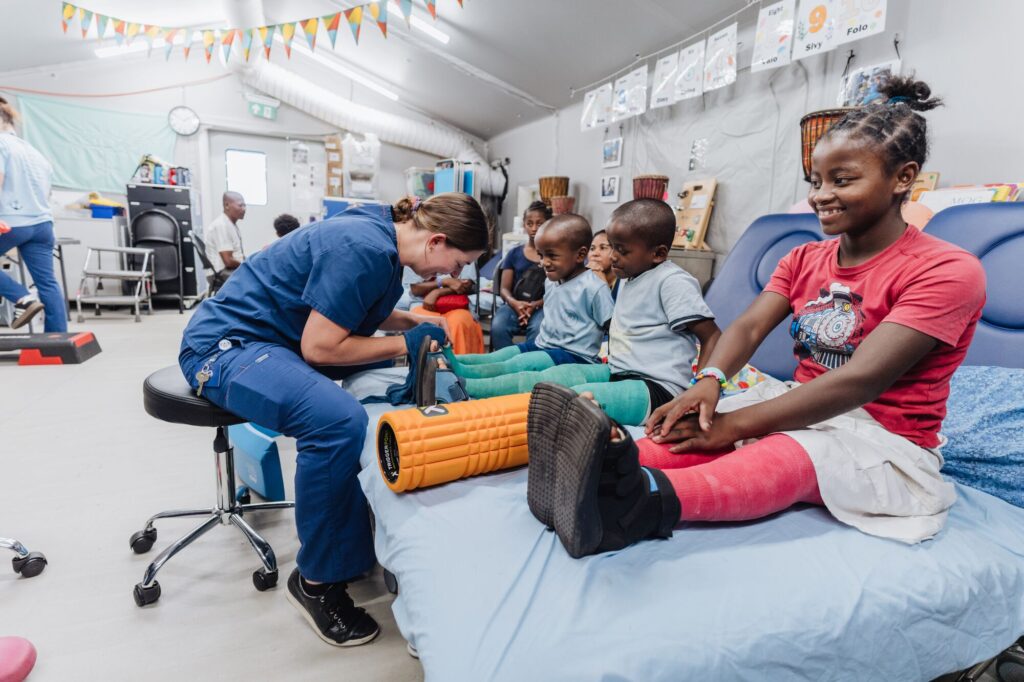
One by one, the children underwent complex orthopedic surgeries aboard the hospital ship. Their bowed legs were the result of untreated rickets, a condition resulting from malnutrition that softens bones during childhood. Without surgery, the deformities would have worsened over time.
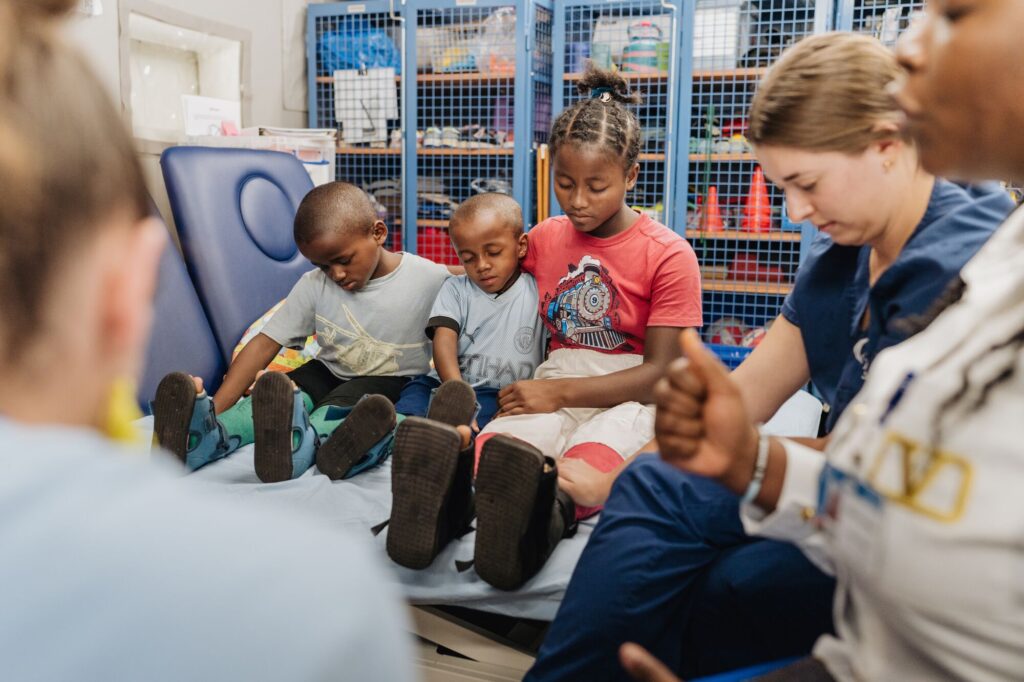
Recovery was slow. Their legs were placed in casts, and learning to walk again was painful. The nurses and therapists encouraged them daily. Exercises were repeated day after day. “They cheered each other on,” Maddy said. “When one reached a milestone, the others believed they could too.”
Progress came in small steps.
“It was like a child learning to walk,” Fanja recalled of Fenitra’s first steps. “She was crying because it hurt. But the nurses and doctors encouraged her, and after some time, she got used to it.”
The children remained in physical rehabilitation for months, practicing daily exercises and slowly rebuilding strength and confidence. Day by day, pain gave way to possibility. Then came the moment when all their hard work finally paid off. “It was just so special seeing them walk down the gangway all together,” Maddy remembered. “Seeing them leave the hospital as a family was beautiful.”
Returning Home Changed
When the family finally returned to their village, the reception was different from the year before.
“People were amazed,” Fanja said. “They were happy to see the children arrive with straight legs.”
Haja remembers that day clearly. “We were all together, and we danced with joy,” he said. “We celebrated until dawn.”
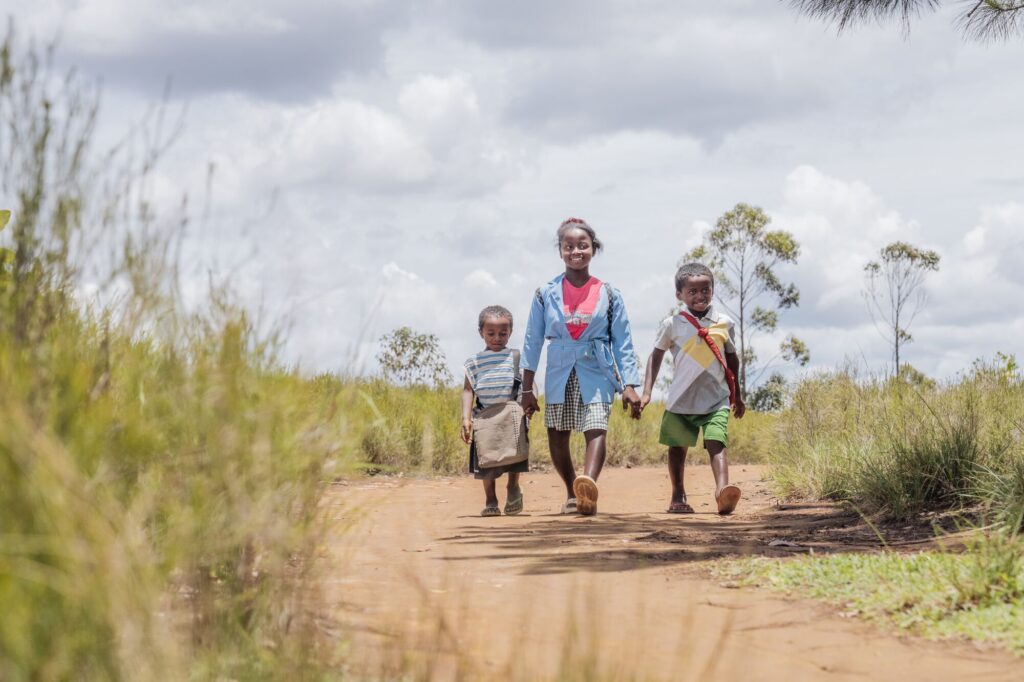
The name that once followed his family began to loosen its grip on them.
“Before, I was hurt by what people said,” Haja said. “But when my children came back healed, I knew that name would disappear.”
For Berthine, the relief was deep. “Before, I worried day and night,” she said. “Now I feel light. My mind is at rest.”
Fenitra, Rolland, and Rody now walk without pain. “Before, we couldn’t go far,” they said. “Now we can walk properly to school.”
Their family is still known in the village. But the story people tell has changed.
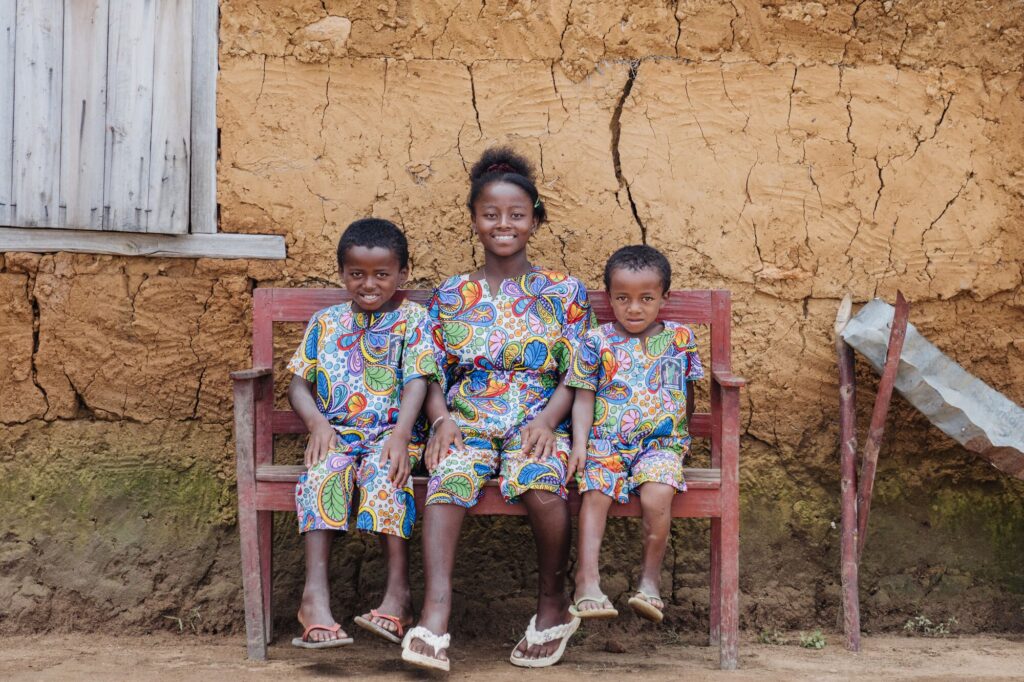
Access to care can transform a family’s future. With your support, Mercy Ships can keep providing free surgeries and help more families step boldly into new chapters. Discover how you can get involved.
Written By: Zeddy Kosgei (KEN)
Photos By: Joshua Chau (CAN)