
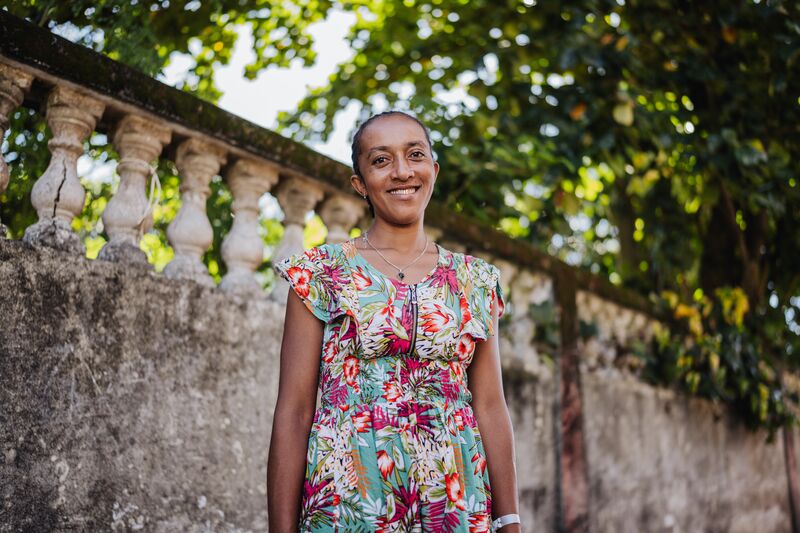
Thirty-one-year-old Aimee’s face lights up when she speaks about her son. She is a young mother with a gentle smile, but behind that smile is a pain she carried quietly for nine years, tied to the very act of becoming a mother.
“It started about a month after I had my baby,” Aimee shared. “I had pain in my back and in my belly. When the pain stopped, I felt something swelling in my intimate area.”
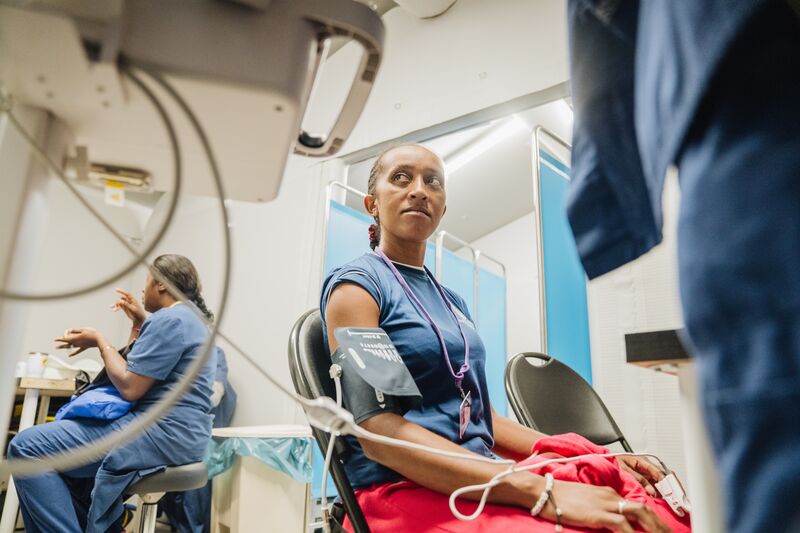
When Aimee sought care at her local hospital, doctors diagnosed her with uterovaginal prolapse, a condition where pelvic organs descend into the birth canal and can cause pain, pressure, and discomfort.
The diagnosis explained what Aimee had been living with, but it did not bring relief.
A Life Quietly Limited
The condition slowly began to shape every part of Aimee’s life and became chronic.
“Before, I was able to do all my work,” she said. “But since I had that sickness, I had to stop working. Sometimes the pain gets really bad.”
Fetching water, carrying heavy loads, and even completing daily household tasks became difficult. As a housekeeper, her inability to work affected her sense of independence and dignity.
For her mother, Céline, watching her daughter suffer was heartbreaking.
“As a mother and as a woman, I was really sad when she was sick,” Céline said. “I had to take care of her because her illness worried me every time I thought about it.”
Together, they searched for help. Aimee visited doctors and traditional healers over the years, but nothing eased her symptoms. “I didn’t see any results,” Aimee said. “The doctors and the traditional treatments didn’t work for me.”
Invisible Suffering
Aimee spoke about her condition only with her mother and close relatives.
“I don’t like talking about it with others,” she said. “They might end up gossiping about me.”
In her community, the illness was invisible, and that invisibility became another burden.
“Because I had a condition that was not visible, some people didn’t believe that I was sick,” she explained. “From the outside, I looked healthy.”
When she spent time with friends, she felt the weight of comparison.
“When we’re together, they’re all healthy,” she said. “I just pretend to be fine even though I’m not.”
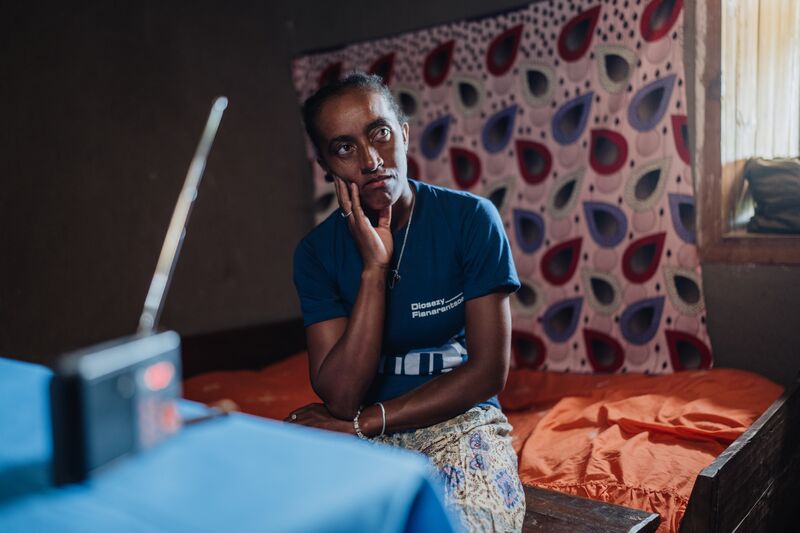
For eight years, Aimee carried this pain quietly until one radio announcement changed everything.
A Reason To Hope
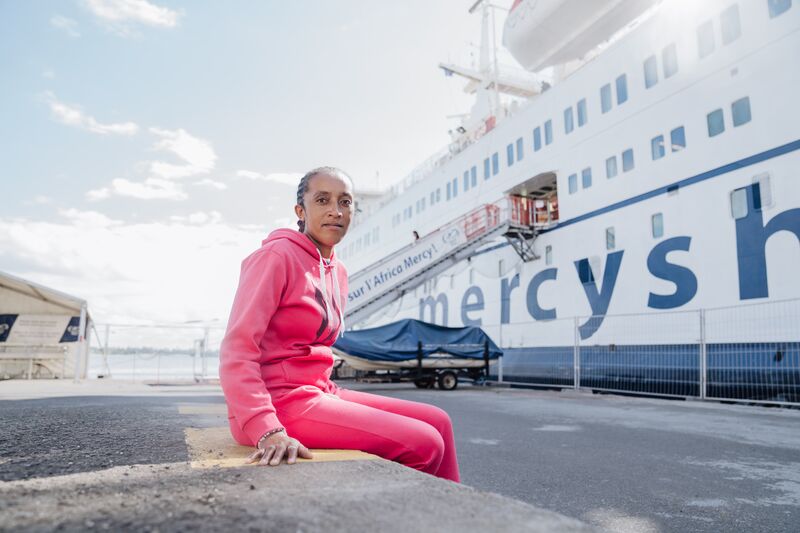
When Aimee heard about Mercy Ships on the radio and learned that surgeries were available for women with conditions like hers, she felt hope for the first time in years.
“I was honestly overjoyed,” she said. “I started hoping right away that I’d be healed.”
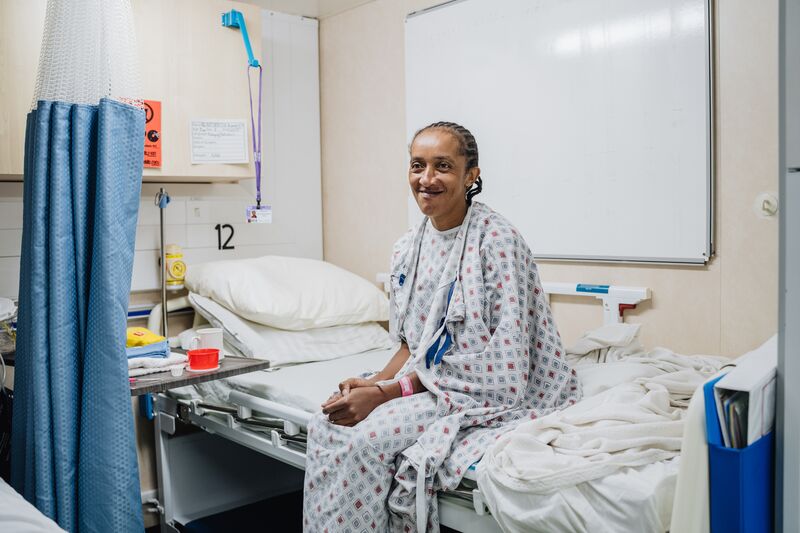
At her preoperative appointments, Aimee met other women facing similar gynecological conditions. As they shared their stories, a common refrain emerged: because people cannot see our illness, they do not believe our pain.
Dr. Jerome Melon, a volunteer gynecological surgeon from Australia, led the medical team that operated on Aimee.
“Gynecological issues are like any other medical issue,” he said. “They affect people’s quality of life. And even if we can’t see it, their lives can be impacted greatly.”
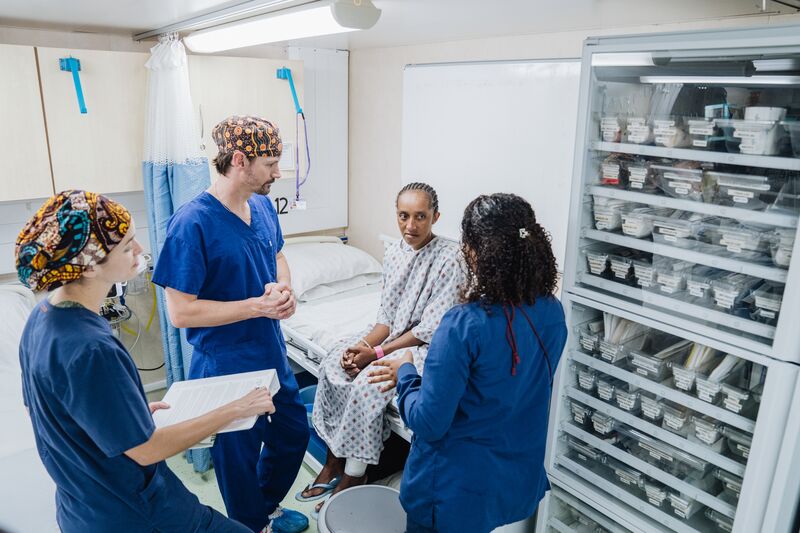
The surgery addressed the physical symptoms that had shaped Aimee’s daily life for years.
“Aimee’s surgery went well; we resolved the prolapse symptoms,” Dr. Melon explained. “That ultimately improves quality of life.”
Healing, Together
After surgery, Aimee spent several days recovering in the women’s health ward. Volunteer Ward Nurse Team Leader Jocelyn Fisher from New Zealand remembers her quiet presence when she first arrived.
“At first, Aimee was quite reserved,” she recalled. “She would sit by herself a lot.”
But something began to shift.
“After surgery, she became closer with the other women,” Jocelyn said. “It’s like a weight was lifted off her shoulders.”
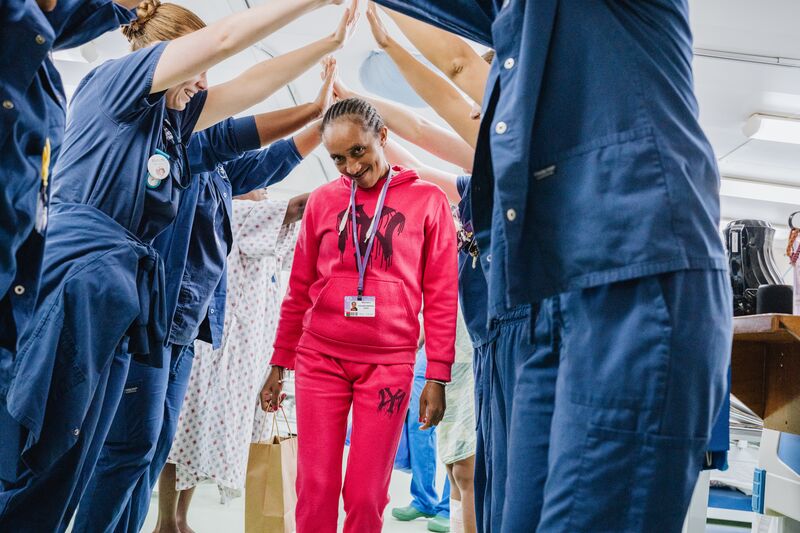
The ward, filled with conversation, shared activities, and gentle music, became a place of connection and healing.
“It’s such a privilege to be a small part of their journey,” Jocelyn reflected. “To show them they are valued and loved.”
So That Others May Know
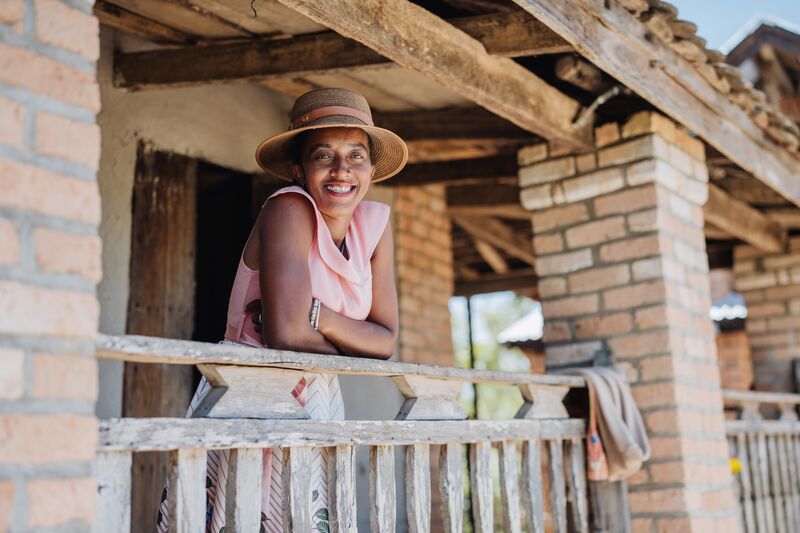
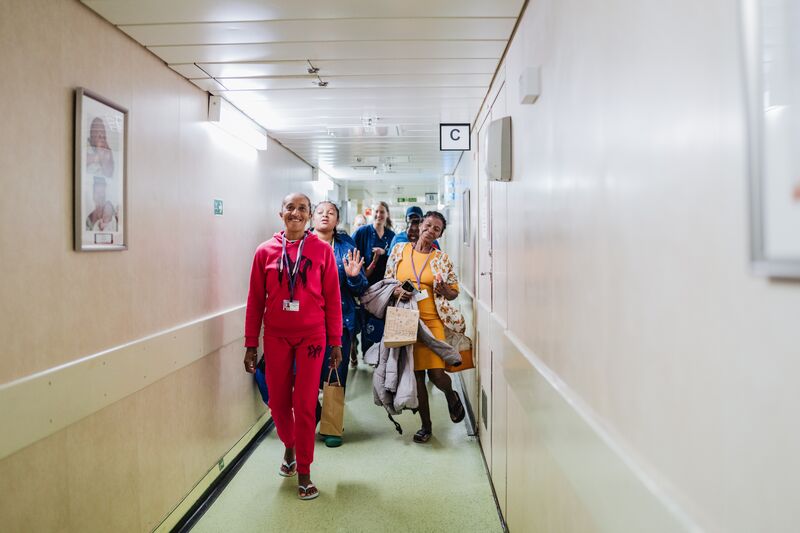
As Aimee regained her strength, she also found her voice.
“I want to share my story,” she said, “because there are many women like me who don’t know where to go for help. I want them to know this condition can be treated.”
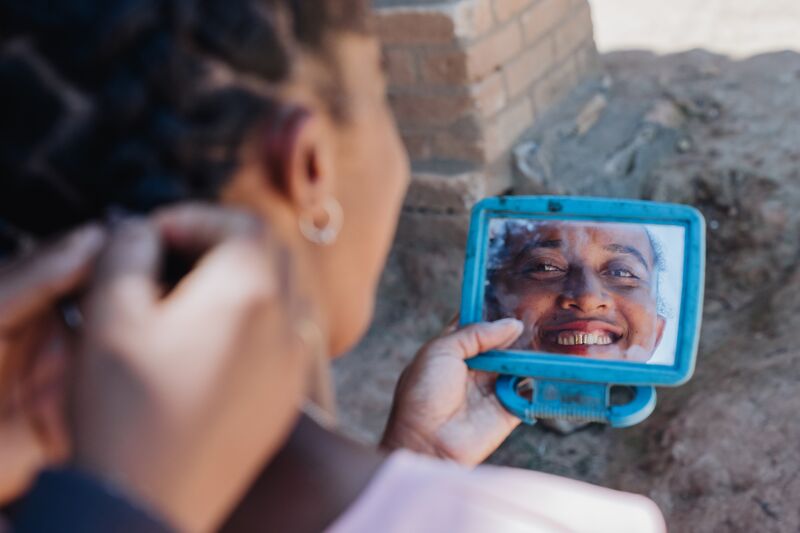
When she returned home, she began speaking openly. One woman in her neighborhood recognized her own symptoms in Aimee’s story and asked how she, too, could seek care.
For Céline, the change in her daughter is unmistakable.
“She’s lively and strong now,” she said. “Not like when she was sick.”
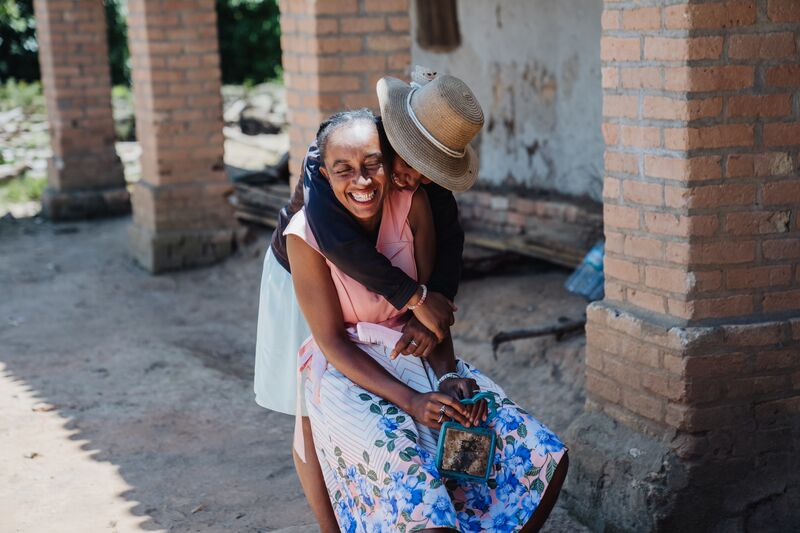
Aimee herself feels the difference deeply. “I feel light,” she shared. “My body is not the same as before.”
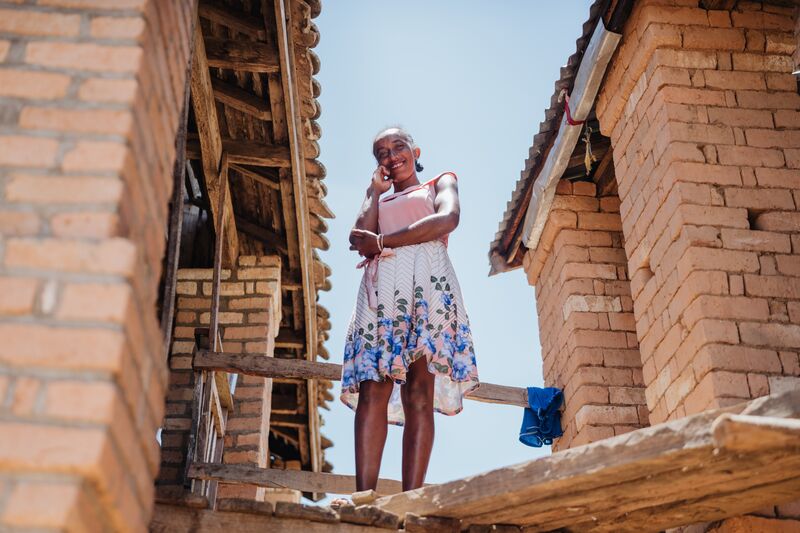
Now, her hope is simple: to live fully as a woman, a mother, and a worker, free from the burden she once carried in silence.
You can partner with Mercy Ships to support women’s health and help provide treatment that restores dignity. Find out how you can get involved: https://www.mercyships.es/